Weeklong science and computer camp scheduled May 14-18
Faculty members from the science and computer departments at Hesston College will host its third annual science and computer camp for high school homeschooled students May 14-18.
Details can be found here.
Wednesday, March 28, 2007

Friday, March 23, 2007
Kansas in National Geographic Magazine
The April 2007 issue of National Geographic features some beautiful photos and a story on the Tallgrass Prairie of the Flint Hills.
Thursday, March 15, 2007
Topeka Area ~ Ballroom Dance Opportunity
Jenn of the Topeka Area Homeschool Network has found an instructor who will teach Ballroom Dance classes during the day. She is willing to organize a class if there is enough interest.
Email tahn@prodigy.net for more details. She would like to schedule a class for April or May.
Email tahn@prodigy.net for more details. She would like to schedule a class for April or May.
Friday, March 09, 2007
Another Great Wolf Lodge Opportunity
If you missed our Third Annual Area Homeschoolers Great Wolf Lodge Get-Away and can't wait to join us in February of 2008, they are having specials for homeschoolers through the months of April and May.
Offer Valid only at Great Wolf Lodge, Kansas City, KS, 4/1-5/31/07. Valid only on Family Suites. Offer is based on 4 guests. Rate is based on per night plus tax, based upon availability. Limited to the first 50 rooms sold per date. Holidays and black out dates may apply. May not be combined with any other discounts or promotional offers. Subject to change at any time without notice. Must mention promo code KHOME at time of reservations. Offer expires 5/31/07.
Contact 1.800.608.WOLF of visit www.greatwolf.com to make reservations.
$109/Night (includes up to 4 waterpark passes)
Sunday - Thursday on Family Suites
Additional Charge for Friday and Saturdays
Mention Promotional Code KHOME at the time of reservation.
Offer Valid only at Great Wolf Lodge, Kansas City, KS, 4/1-5/31/07. Valid only on Family Suites. Offer is based on 4 guests. Rate is based on per night plus tax, based upon availability. Limited to the first 50 rooms sold per date. Holidays and black out dates may apply. May not be combined with any other discounts or promotional offers. Subject to change at any time without notice. Must mention promo code KHOME at time of reservations. Offer expires 5/31/07.
Contact 1.800.608.WOLF of visit www.greatwolf.com to make reservations.
Homeschoolers find University Doors Open
Thanks to Shelley R. for the link.
An associated press article talking about universities adjusting to make admissions policies more friendly for homeschoolers.
An associated press article talking about universities adjusting to make admissions policies more friendly for homeschoolers.
"Some private colleges have eagerly recruited those students for years and tailored application processes to include them. Homeschoolers still face challenges when applying to many public universities, but their chances of being considered are improving."
Have Kids - Will Travel
Please note that I am not endorsing this site, but it was recently brought to my attention and it certainly sparked my interest.
I would say the point of the website is primarily to market the book, but they offer a free newsletter and their archives are available online, as well.
Have Kids - Will Travel
I would say the point of the website is primarily to market the book, but they offer a free newsletter and their archives are available online, as well.
Have Kids - Will Travel
Sunday, March 04, 2007
In a class of their own
Article in the February 28, 2007 issue of The Harvard Crimson.
While I, personally, hate to think of the pressure these kids were put under to even get to Harvard, this article provides an interesting look into the lives of some of our "top" homeschoolers.
While I, personally, hate to think of the pressure these kids were put under to even get to Harvard, this article provides an interesting look into the lives of some of our "top" homeschoolers.
Home School Day at Worlds of Fun
Friday, August 24, 2007
Home School Instructors and Students, schedule thrills and family fun into your lesson plans for Friday, August 24, 2007. Home School Day at Worlds of Fun and Oceans of Fun offers great discounts on admission tickets and a meal option. Home School Day is the perfect opportunity to experience 235 acres of the region's greatest collection of wet and dry attractions.
Click here for details and pricing. (pdf file)
Thursday, March 01, 2007
Third Annual Area Homeschoolers GWL Get-Away
KSHomeschool.net organized the gathering with
a total of 140+ attendees from across the state of Kansas.
We met new friends from:
Baldwin • Blue Springs • Dodge City • Edwardsville • Emporia • Gardner • Hutchinson
Kansas City KS • Lawrence • Lecompton • Lenexa • Manhattan • Osage City • Shawnee
Smithville MO • Spearville • Tonganoxie • Topeka • Wichita


"The 2007 trip to Great Wolf Lodge was really fun. We went to the arcade and went on the yellow slide many times. My friend Jennifer had never been to the Great Wolf Lodge so we went on all the slides. Me and my friends spent a lot of time in the hot tub." ~ Evie


"We just got home and are all happy and TIRED! We made new friends and got to spend time with old ones. We can't wait till next year!!" ~Claudia


"The kids had a blast making friends and wearing out the waterpark. I really enjoyed meeting such a wide variety of families and hearing brief histories of your homeschooling experiences. I went to meet perfect strangers, and left with a few new friends." ~Meg


"It was so nice meeting all of you finally! We had a great time, thanks for organizing this. We will definitely come back." ~ Stephanie

This is the closest we came to a group photo. I am sorry that my camera did not have the power to do such large group justice.

Thursday, February 22, 2007
School? Not
An interview with Valerie Fitzenreiter, author of The Unprocessed Child, and her daughter, Laurie.
School? Not
School? Not
Tuesday, February 13, 2007
Home School Days at Union Station
February 20-23, 2007
Special Rates for Union Station
General Admission: $6/person
Theater Admission: $3.50/Extreme Screen $5/Theatre for Young America
Dead Sea Scrolls: $10.95/person (Advanced reservations strongly recommended)
Current Extreme Screen Movies
Sharks 3D & Mystery of the Nile
Traveling Exhibit, Dead Sea Scrolls
February 8 - May 13
30 W. Pershing Road
Kansas City, MO
816-460-2020
unionstation.org
Special Rates for Union Station
General Admission: $6/person
Theater Admission: $3.50/Extreme Screen $5/Theatre for Young America
Dead Sea Scrolls: $10.95/person (Advanced reservations strongly recommended)
Current Extreme Screen Movies
Sharks 3D & Mystery of the Nile
Traveling Exhibit, Dead Sea Scrolls
February 8 - May 13
30 W. Pershing Road
Kansas City, MO
816-460-2020
unionstation.org
Saturday, February 10, 2007
YOU can Contribute to Kansas Homeschool Network
- Send us your Show & Tell. Anything goes!
- Tell us something about the latest homeschooling book you have read.
- Make sure your homeschool group is listed in our directory.
- Contribute your own article or essay to the website.
- Send us the link to your blog or family website.
- Share our address with other homeschoolers who might appreciate the Kansas Area Homeschool Network community.
- Bookmark our blog to keep up on Kansas activities and homeschooling news.
- Better yet, volunteer to help us keep the blog current and updated! Email Tracy at goobmom23 AT yahoo DOT com for details.
- Send us your thoughts, suggestions, comments... we'd love to hear from you!
Catching up with Unschooling in the News
'Unschool' parents: Kids can be own best teachers
Many educators fear free-form style leaves learning incomplete
from Tennesean.com 1/28/07
And a sidebar, Exact number who unschool hard to know
Unschooling Appeals to Some
from ThePilot.com 1/16/07
Many educators fear free-form style leaves learning incomplete
from Tennesean.com 1/28/07
And a sidebar, Exact number who unschool hard to know
Unschooling Appeals to Some
from ThePilot.com 1/16/07
Thursday, February 08, 2007
Territorial Kansas Online
1854-1861
A Virtual Repository for Territorial Kansas History
"Explore the turbulent times of "Bleeding Kansas." Hundreds of personal letters, diaries, photos, and maps bring to life the settling of Kansas during the fierce debate over slavery."
A Virtual Repository for Territorial Kansas History
"Explore the turbulent times of "Bleeding Kansas." Hundreds of personal letters, diaries, photos, and maps bring to life the settling of Kansas during the fierce debate over slavery."
Wednesday, January 24, 2007
Thursday, January 18, 2007
No core subjects, no imposed curricula? You must be unschooled
Apparently unschooling is the news to be written about these days. This article in the Sacramento Bee was published on January 11, 2007.
I can't imagine that any unschooler would actually say the act of putting books in front of their children is so repugnant. Forcing them to read the books or giving them quizzes about what they learn from the books -- that's another story. Perhaps I am reading too literally.
Forced to defend an unusual educational practice, unschoolers take great care as to how they describe it. Buchanan hedges a bit when asked if she's an unschooler. She does put books in front of her children from time to time, which is anathema to orthodox unschoolers.
I can't imagine that any unschooler would actually say the act of putting books in front of their children is so repugnant. Forcing them to read the books or giving them quizzes about what they learn from the books -- that's another story. Perhaps I am reading too literally.
Kansas Communities on the Web
If you are looking for information about a specific town in Kansas, this website seems to be a good place to start.
You Have to Trust that the Child will Learn
This article posted at The Natural Child Project was first published in The Chicago Sun-Times in December 2006.
Overall, this is a very positive article on unschooling. Even though the focus of the article is on a high-achieving unschooler who has gained early admittance into Princeton, the author writes, "But just like traditional schoolers, not all unschoolers want college."
Thanks to Nancy for the link.
Overall, this is a very positive article on unschooling. Even though the focus of the article is on a high-achieving unschooler who has gained early admittance into Princeton, the author writes, "But just like traditional schoolers, not all unschoolers want college."
Thanks to Nancy for the link.
Monday, January 08, 2007
Schools kill Creativity
Well worth 20 minutes of your time, this commentary on education, by Sir Ken Robinson, talks about creativity and the need to rethink the standard operating mode of public schools.
Click Here to view Video.
Click Here to view Video.
Fifth Annual Spring Contest for Young Writers
an invitation from Dorothy Masters, This and That Columnist
Pen me a poem, write me a story, fiction or non-fiction, use the computer or write by hand. You pick the subject, it is your work! Any writing talent you care to share with me will work for my contest in the spring. If the younger children would like to enter, tell your story in picture form.
I will ask members of the Kansas Authors Club to help judge the entries to award engraved medals for your effort. Sharpen up your wit and show your best writing talent with poetry, prose or art work. If there is any interest, I will ask my editors to print the prize winners again this year, but I need to hear if anyone does or does not want their work printed. If you want it printed in a local paper in my weekly column, write me a note, sign your name and have your parents sign to give me permission to print your work. Send a comment to me and the editor of your paper if the general public enjoys reading the children’s work in your local paper.
Any child is eligible through high school level including home schooled children. Entries must be in my hands by March 1, 2007.
Be sure and put your name and address on your work so I can notify you of the winners. Keep a copy of entries; your work may not be returned to you because the vast amount of entries..
Send to: Dorothy Masters
13842 High-way K- 31
Harveyville, Kansas 66431
Telephone 1-785-589-2552
Email: masters1936@earthlink.net
The subject is wide open, let you imagination soar and tell a great story or spell out a life lesson. Good human interest stories cover many topics and a wide range of ideas. Your pets make wonderful stories to share. There is no limit as to number of words; it is the thought content that matters.
There will be a new category this year because of Burlingame Rodeo Days in May. The Rodeo Days Planners have asked me to add a category to my youth writing contest to promote some interest about the Burlingame Community with the writing of many historical points of the area. Mr. James Nelson has agreed to teach a workshop on how to do Historical Research. More about that class will follow, be thinking about what aspect of the history you would like to research.
For historical facts, consider interviewing your parents, grandparents and older friends to collect their stories and memories of significant persons, places or events in Burlingame and the surrounding area; they are great resources of the past.
Pen me a poem, write me a story, fiction or non-fiction, use the computer or write by hand. You pick the subject, it is your work! Any writing talent you care to share with me will work for my contest in the spring. If the younger children would like to enter, tell your story in picture form.
I will ask members of the Kansas Authors Club to help judge the entries to award engraved medals for your effort. Sharpen up your wit and show your best writing talent with poetry, prose or art work. If there is any interest, I will ask my editors to print the prize winners again this year, but I need to hear if anyone does or does not want their work printed. If you want it printed in a local paper in my weekly column, write me a note, sign your name and have your parents sign to give me permission to print your work. Send a comment to me and the editor of your paper if the general public enjoys reading the children’s work in your local paper.
Any child is eligible through high school level including home schooled children. Entries must be in my hands by March 1, 2007.
Be sure and put your name and address on your work so I can notify you of the winners. Keep a copy of entries; your work may not be returned to you because the vast amount of entries..
Send to: Dorothy Masters
13842 High-way K- 31
Harveyville, Kansas 66431
Telephone 1-785-589-2552
Email: masters1936@earthlink.net
The subject is wide open, let you imagination soar and tell a great story or spell out a life lesson. Good human interest stories cover many topics and a wide range of ideas. Your pets make wonderful stories to share. There is no limit as to number of words; it is the thought content that matters.
There will be a new category this year because of Burlingame Rodeo Days in May. The Rodeo Days Planners have asked me to add a category to my youth writing contest to promote some interest about the Burlingame Community with the writing of many historical points of the area. Mr. James Nelson has agreed to teach a workshop on how to do Historical Research. More about that class will follow, be thinking about what aspect of the history you would like to research.
For historical facts, consider interviewing your parents, grandparents and older friends to collect their stories and memories of significant persons, places or events in Burlingame and the surrounding area; they are great resources of the past.
The Kansas Collection
Online, searchable.
The Kansas Collection
"The voices of the past are heard again in KanColl, through nearly-lost books, letters, diaries, photographs, and other materials."
The Kansas Collection
"The voices of the past are heard again in KanColl, through nearly-lost books, letters, diaries, photographs, and other materials."
Saturday, January 06, 2007
Grammar & Spelling
unschooling in action
People often ask how unschooling looks or how it happens. It may sound intriguing, but how DO kids learn things like grammar and spelling. Here are some examples of unschooling in action. If you have an example you would like to share, please send an email to goobmom23 AT yahoo DOT com.
My 10-year-old had been exchanging emails with a friend. They’d been on for much of the afternoon – apparently having a sort of running conversation through email.
My daughter mentioned that she always tries to write using capitals and periods in the correct places. She said, "I notice when my friend writes to me, she doesn't do that at all. She never uses capitals and she misspells a lot of stuff." I told her that I thought the girl was using a lot of "internet writing" which was really more of a new language that was evolving. She said, "Like LOL and OMG?" So we talked about that type of writing and what she thought about it. I admitted that I was probably a bit of a language snob. I've adopted some of it -- the smiley face and LOL most specifically, but I told her I still prefer the standard (pre-Internet) way of writing. She thought she did too. She said a lot of the shortcut writing is hard to read, hard to understand, and we discussed how it was a lot like learning a foreign language.
Then she told me that she thought the spell check on yahoo email worked better than the one on Microsoft Word. We pulled up Word and I showed her how she hadn't been using the full-blown spell check. She just right clicks on words the computer underlines in red as she is typing. I had her type three sentences, told her not to worry about the spelling, just to type them. The second sentence she typed entirely correct without help. That's why I had her type a third. I showed her the "spelling and grammar" check function then. It helped her correct a couple of words she struggled with. One of the things she had typed was “a elepant.” The spell/grammar tool suggested "an" instead, so we talked about the use of “a” vs. “an”. I can guarantee that the information stuck because I’ve seen her use a/an correctly since then. Oh, and she was tickled that she was so close to the correct spelling of elephant and told me that she knew the "ph" for "f" sound but had forgotten.
Then she asked me about something she had come across while working on a story she has been writing. She said that when she wrote, "Jake, me and Mom went to the store," the computer would correct her and suggest that "I" should be used. She asked if that was right because it sounded wrong to her. So I showed her that the way to figure it out was to say each individually... Jake went to the store, Me went to the store, Mom went to the store. She agreed immediately that "I went to the store" sounded better, but still felt that it sounded too stuffy when she used all three people going -- she wanted to use "me." We also talked about the ordering of the subjects in a sentence like this and what was grammatically correct compared to what was politely correct. (Jake, Mom and I...)
She asked if it was a style thing that you could do either way. I told her that this was a case where I would argue that it was not a style thing. However, I agreed that you can always decide to break a grammar rule if you want to, but that this was one I wouldn't break. Then we talked about using I as the subject of a sentence and me as the object. This got a little deeper and I'm not sure it was entirely clear to her, but she was satisfied for the time being.
THIS was such a satisfying experience. We really had some connecting time and it was so cool hearing her ask these questions and knowing how she is putting this knowledge to use. She is improving in leaps and bounds with her writing skills. She's asking the questions and getting the answers and putting it together in a way that makes sense to her.
I also got to read her story. It is now almost two pages long (single spaced) and I can’t tell you how exciting it is to watch something like this unfold. I’ve been typing stories as my kids dictate them for years. Each time I get to read what she has written, we discuss first if she wants my editing assistance or if she just wants me to read it for story. This time, it was just to read the story. It was wonderful. The coolest thing is that she loves the story, too, and she’s enjoying the process of writing it.
-Tracy S.
I was reading a book to the kids and the kids asked, "what's this?" and were pointing to a comma and "what's that?" and were pointing to an asterisk, so I got to explain what they were for and why. I was writing a story for Jade on the computer and she asked why I wrote it the way I did. Her story has lots of dialogue. So I explained what the quotes were for. The thing that was really cool to me is that her writing had such active voice. She has listened to so many books she just knows intuitively that a good story is very active. We've been having some fun with "spelling" sort of. Jade and I are playing lots of hangman. It's a game for her but it's helping her see patterns to words. Corbin plays along too but he goes to find words for me to guess.
- Samantha S.
Today in the car, my son, age 6, said, "Mom! That sign said zoo -- only it had one 'o' instead of two and the 'z' was sideways." We had to look at the sign again. It said, "No" as in "no parking on this side of street." I think perhaps he was just really hoping for a zoo trip.
-Tracy S.
People often ask how unschooling looks or how it happens. It may sound intriguing, but how DO kids learn things like grammar and spelling. Here are some examples of unschooling in action. If you have an example you would like to share, please send an email to goobmom23 AT yahoo DOT com.
My 10-year-old had been exchanging emails with a friend. They’d been on for much of the afternoon – apparently having a sort of running conversation through email.
My daughter mentioned that she always tries to write using capitals and periods in the correct places. She said, "I notice when my friend writes to me, she doesn't do that at all. She never uses capitals and she misspells a lot of stuff." I told her that I thought the girl was using a lot of "internet writing" which was really more of a new language that was evolving. She said, "Like LOL and OMG?" So we talked about that type of writing and what she thought about it. I admitted that I was probably a bit of a language snob. I've adopted some of it -- the smiley face and LOL most specifically, but I told her I still prefer the standard (pre-Internet) way of writing. She thought she did too. She said a lot of the shortcut writing is hard to read, hard to understand, and we discussed how it was a lot like learning a foreign language.
Then she told me that she thought the spell check on yahoo email worked better than the one on Microsoft Word. We pulled up Word and I showed her how she hadn't been using the full-blown spell check. She just right clicks on words the computer underlines in red as she is typing. I had her type three sentences, told her not to worry about the spelling, just to type them. The second sentence she typed entirely correct without help. That's why I had her type a third. I showed her the "spelling and grammar" check function then. It helped her correct a couple of words she struggled with. One of the things she had typed was “a elepant.” The spell/grammar tool suggested "an" instead, so we talked about the use of “a” vs. “an”. I can guarantee that the information stuck because I’ve seen her use a/an correctly since then. Oh, and she was tickled that she was so close to the correct spelling of elephant and told me that she knew the "ph" for "f" sound but had forgotten.
Then she asked me about something she had come across while working on a story she has been writing. She said that when she wrote, "Jake, me and Mom went to the store," the computer would correct her and suggest that "I" should be used. She asked if that was right because it sounded wrong to her. So I showed her that the way to figure it out was to say each individually... Jake went to the store, Me went to the store, Mom went to the store. She agreed immediately that "I went to the store" sounded better, but still felt that it sounded too stuffy when she used all three people going -- she wanted to use "me." We also talked about the ordering of the subjects in a sentence like this and what was grammatically correct compared to what was politely correct. (Jake, Mom and I...)
She asked if it was a style thing that you could do either way. I told her that this was a case where I would argue that it was not a style thing. However, I agreed that you can always decide to break a grammar rule if you want to, but that this was one I wouldn't break. Then we talked about using I as the subject of a sentence and me as the object. This got a little deeper and I'm not sure it was entirely clear to her, but she was satisfied for the time being.
THIS was such a satisfying experience. We really had some connecting time and it was so cool hearing her ask these questions and knowing how she is putting this knowledge to use. She is improving in leaps and bounds with her writing skills. She's asking the questions and getting the answers and putting it together in a way that makes sense to her.
I also got to read her story. It is now almost two pages long (single spaced) and I can’t tell you how exciting it is to watch something like this unfold. I’ve been typing stories as my kids dictate them for years. Each time I get to read what she has written, we discuss first if she wants my editing assistance or if she just wants me to read it for story. This time, it was just to read the story. It was wonderful. The coolest thing is that she loves the story, too, and she’s enjoying the process of writing it.
-Tracy S.
I was reading a book to the kids and the kids asked, "what's this?" and were pointing to a comma and "what's that?" and were pointing to an asterisk, so I got to explain what they were for and why. I was writing a story for Jade on the computer and she asked why I wrote it the way I did. Her story has lots of dialogue. So I explained what the quotes were for. The thing that was really cool to me is that her writing had such active voice. She has listened to so many books she just knows intuitively that a good story is very active. We've been having some fun with "spelling" sort of. Jade and I are playing lots of hangman. It's a game for her but it's helping her see patterns to words. Corbin plays along too but he goes to find words for me to guess.
- Samantha S.
Today in the car, my son, age 6, said, "Mom! That sign said zoo -- only it had one 'o' instead of two and the 'z' was sideways." We had to look at the sign again. It said, "No" as in "no parking on this side of street." I think perhaps he was just really hoping for a zoo trip.
-Tracy S.
Wednesday, January 03, 2007
January 8 Deadline for Great Wolf Lodge Gathering
The Kansas Homeschool Network invites you to attend the
Third Annual Area Homeschoolers
Great Wolf Lodge Get-Away
February 27-28, 2007
Great Wolf - Kansas City
You MUST make reservations by January 8, 2007, to guarantee a spot!
Use Group Code 6A522A when making reservations online.
or call 1-800-608-9653 and reference our group name:
Kansas Area Homeschool Network
Email Tracy at kshomeschool dot net for details on room rates, reservation requirements, or questions. If you prefer rooms that aren't listed for our coupon code, contact Tracy for information on other options.
Pre-check in starts at 1pm on the 27th. You can receive your waterpark passes at this time and begin swimming. Guest room check-in begins at 4pm. Check-out on the 28th is 11am, but you are free to use the waterpark the entire day on Wednesday.
Third Annual Area Homeschoolers
Great Wolf Lodge Get-Away
February 27-28, 2007
Great Wolf - Kansas City
You MUST make reservations by January 8, 2007, to guarantee a spot!
Use Group Code 6A522A when making reservations online.
or call 1-800-608-9653 and reference our group name:
Kansas Area Homeschool Network
Email Tracy at kshomeschool dot net for details on room rates, reservation requirements, or questions. If you prefer rooms that aren't listed for our coupon code, contact Tracy for information on other options.
Pre-check in starts at 1pm on the 27th. You can receive your waterpark passes at this time and begin swimming. Guest room check-in begins at 4pm. Check-out on the 28th is 11am, but you are free to use the waterpark the entire day on Wednesday.
Alternative Form of Homeschooling Embraces Child Directed Learning
If you can ignore the idiotic comment from the "expert" at the end, this is one of the best articles on unschooling that I have seen.
Article from the Post-Tribune.
"It's an awareness that learning is always happening because it's part of living."
--Jane Van Stelle Haded
Article from the Post-Tribune.
"It's an awareness that learning is always happening because it's part of living."
--Jane Van Stelle Haded
Monday, January 01, 2007
Cloudday
"Tomorrow is Cloudday."
"Cloudday?" I said.
"Yes. Thursday, Friday, Saturday, Sunday, Cloudday.
If there is Sunday there has to be Cloudday."
Ezzie & his momma, Steph
Monday, December 18, 2006
Richard Feynman on Education
This is an old article from the Growing Without Schooling archives. Thanks to Jane on the unschoolkansas discussion list for bringing it to our attention.
Some thoughts from well-known physicist Richard Feynman, interviewed in U.S. News & World Report, 3/18/85:
…There’s a great deal of intimidation by intellectuals in this country of less intellectual people. It comes in the form of pompous studies and pompous words to describe ideas that are fairly simple or have very little content. If someone says they do not understand one of these ideas, they’re put down, which must be hard for those who don’t have too much confidence in their own intelligence. People think that all the experts know what they are doing.
But most experts, whether in the stock market, education, sociology or some parts of psychology, don’t know more than the average person. They may act as though they are engaged in real science. They do studies, follow certain methods and have results. They follow all the apparent precepts and forms of scientific investigation, but they’re missing something essential.
…Take educational theory. How do you know that people in schools of education don’t know anything about how to educate children - not that anyone else knows, either? Well, are the schools improving? Have educational systems gotten better as the years have gone on? It’s very easy to see that the witch doctors are not curing most diseases.
…I sometimes feel that it would be much better not to educate our children in such subjects as mathematics and science. If we left youngsters alone, there would be a better chance that, by accident, the kids would find a good book - or an old textbook - or a television program that would excite them. But when youngsters go to school, they learn that these subjects are dull, horrible and impossible to understand. When I went to school, I didn’t learn that math and science were dull because I knew before I got there that they were interesting. All I saw was that they were dull in school. But I knew better….
I once sat in a committee in California that chose new schoolbooks for the state… The books said things that were useless, mixed up, ambiguous, confusing and partially incorrect. How anybody could learn science from these books, I don’t know.
What happens often is that state bodies decide what ought to be in the curriculum on the basis of what so-called experts think. This has a tremendous influence on publishers, who want their books to cover every single item on the suggested list. Publishers try very hard to follow what states want, and in the end, the books are poor. They don’t try to make subjects easier to understand. They try to make it easier to know what to do to pass the test and please the teacher. They’re involved in making sure that certain items are understood by children so that they can go on to the next course, which is designed in exactly the same way.
Someday people will look back at our age and they’ll think: "My goodness, how they tortured their children! Year after year they wen to these schools every day for hours. yet look how easy it is to teach. But they didn’t know how to do it back then…"
Some thoughts from well-known physicist Richard Feynman, interviewed in U.S. News & World Report, 3/18/85:
…There’s a great deal of intimidation by intellectuals in this country of less intellectual people. It comes in the form of pompous studies and pompous words to describe ideas that are fairly simple or have very little content. If someone says they do not understand one of these ideas, they’re put down, which must be hard for those who don’t have too much confidence in their own intelligence. People think that all the experts know what they are doing.
But most experts, whether in the stock market, education, sociology or some parts of psychology, don’t know more than the average person. They may act as though they are engaged in real science. They do studies, follow certain methods and have results. They follow all the apparent precepts and forms of scientific investigation, but they’re missing something essential.
…Take educational theory. How do you know that people in schools of education don’t know anything about how to educate children - not that anyone else knows, either? Well, are the schools improving? Have educational systems gotten better as the years have gone on? It’s very easy to see that the witch doctors are not curing most diseases.
…I sometimes feel that it would be much better not to educate our children in such subjects as mathematics and science. If we left youngsters alone, there would be a better chance that, by accident, the kids would find a good book - or an old textbook - or a television program that would excite them. But when youngsters go to school, they learn that these subjects are dull, horrible and impossible to understand. When I went to school, I didn’t learn that math and science were dull because I knew before I got there that they were interesting. All I saw was that they were dull in school. But I knew better….
I once sat in a committee in California that chose new schoolbooks for the state… The books said things that were useless, mixed up, ambiguous, confusing and partially incorrect. How anybody could learn science from these books, I don’t know.
What happens often is that state bodies decide what ought to be in the curriculum on the basis of what so-called experts think. This has a tremendous influence on publishers, who want their books to cover every single item on the suggested list. Publishers try very hard to follow what states want, and in the end, the books are poor. They don’t try to make subjects easier to understand. They try to make it easier to know what to do to pass the test and please the teacher. They’re involved in making sure that certain items are understood by children so that they can go on to the next course, which is designed in exactly the same way.
Someday people will look back at our age and they’ll think: "My goodness, how they tortured their children! Year after year they wen to these schools every day for hours. yet look how easy it is to teach. But they didn’t know how to do it back then…"
Sunday, December 17, 2006
Kansas Kaleidoscope
A Kansas history magazine written for young readers. Published 5 times a year and the price is right, too. $7.00! Back issues are available on the website.
Sunday, December 10, 2006
When DROPOUT isn’t a bad word:
Some local teens are thriving by setting their own schedules and learning by doing
Unschool Article from The Patriot Ledger, Boston.
Unschool Article from The Patriot Ledger, Boston.
Friday, December 08, 2006
To See in February ~ Dead Sea Scrolls
from the website:
The Dead Sea Scrolls
Union Station is proud to present the only Midwest stop for this monumental exhibition, including some scrolls never before displayed in the United States.
Experience the most remarkable archeological discovery of the last century: the oldest surviving manuscripts of the Hebrew Bible, known to Christians as the Old Testament. Explore the history and significance of the scrolls and discover the mystery of how they were created more than 2000 years ago. In addition to the scrolls, this exhibition will also feature a multitude of artifacts from Qumran, where the scrolls were discovered, as well as other artifacts from the region.
The Dead Sea Scrolls
Union Station is proud to present the only Midwest stop for this monumental exhibition, including some scrolls never before displayed in the United States.
Experience the most remarkable archeological discovery of the last century: the oldest surviving manuscripts of the Hebrew Bible, known to Christians as the Old Testament. Explore the history and significance of the scrolls and discover the mystery of how they were created more than 2000 years ago. In addition to the scrolls, this exhibition will also feature a multitude of artifacts from Qumran, where the scrolls were discovered, as well as other artifacts from the region.
Saturday, December 02, 2006
This Day in Kansas History
The Kansas Historical Society has a calendar of historical events of interest to Kansans.
Click here for December's Calendar.
Click here for December's Calendar.
Monday, November 27, 2006
Robots at Union Station
from the website:
ROBOTS: The Interactive Exhibition
Now thru Jan. 7, 2007
Tuesday - Sunday
Take an educational, fun and exciting journey through a mechanical world.
ROBOTS: The Interactive Exhibition captures the imagination and excitement of the hit animated film Robots and translates it into an entertaining and educational experience for the whole family. See how robots can make our lives better today and in the future. Learn how the movie was created, play interactive games, and build your own robot!
Read more.
ROBOTS: The Interactive Exhibition
Now thru Jan. 7, 2007
Tuesday - Sunday
Take an educational, fun and exciting journey through a mechanical world.
ROBOTS: The Interactive Exhibition captures the imagination and excitement of the hit animated film Robots and translates it into an entertaining and educational experience for the whole family. See how robots can make our lives better today and in the future. Learn how the movie was created, play interactive games, and build your own robot!
Read more.
Monday, November 20, 2006
New Carousel Animals/Contest - Kansas City Zoo
From the Kansas City Zoo Website:
New Carousel Animals/Contest
Endangered Species Carousel to Open Spring 2007
Every paid visitor in November and December receives a ticket to ride the carousel in 2007. Guess the weight of the animal (three winners) and receive a season rides pass for the carousel, good for all of 2007.
The Zoo will unveil a new carousel in May 2007. It will feature 36 hand-carved wooden animals, all endangered species.
See pictures on the website.
New Carousel Animals/Contest
Endangered Species Carousel to Open Spring 2007
Every paid visitor in November and December receives a ticket to ride the carousel in 2007. Guess the weight of the animal (three winners) and receive a season rides pass for the carousel, good for all of 2007.
The Zoo will unveil a new carousel in May 2007. It will feature 36 hand-carved wooden animals, all endangered species.
See pictures on the website.
Sunday, November 19, 2006
Homeschooling on Dr. Phil this Friday
The Great School Debate will be on Dr. Phil this Friday, November 24.
Links to some interesting articles regarding the show here.
If you watch, let us know what you think.
Links to some interesting articles regarding the show here.
If you watch, let us know what you think.
Saturday, November 18, 2006
Museum of World Treasures - Wichita
My kids and I recently visited the Museum of World Treasures in Wichita. It was an extremely positive experience and I highly recommend it. We were thrilled with the wide variety of items on display, but especially impressed by the fact that you could really get up close and examine so many of the items on display.
I can probably say more with pictures than in words:
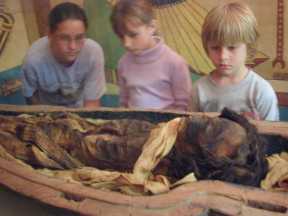
An Egyptian Mummy
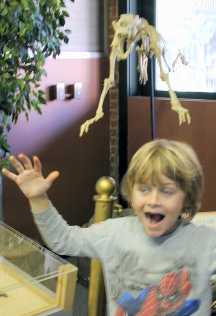
A big cat of some sort.
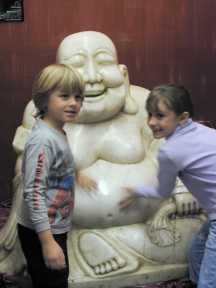
Rubbing the Buddah's Belly
I can probably say more with pictures than in words:
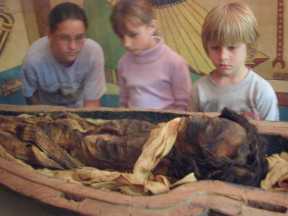
An Egyptian Mummy

A big cat of some sort.
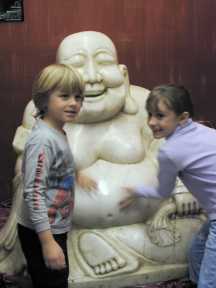
Rubbing the Buddah's Belly
If you are in Wichita, don't miss this museum. It's worth a road trip if you are looking for something to do.
Monday, November 13, 2006
Native American Heritage Museum
The Native American Heritage Museum State Historic Site presents "Moccasins to Tees: Native Art Then and Now"
This special exhibit is on display through November 30, 2006 at the Museum, 1737 Elgin Road, 3 miles east of Highland, Kansas.
Exhibit Ends: November 30, 2006
Contact Information:
Suzette McCord-Rogers
785 442-3304
nahm@kshs.org
This special exhibit is on display through November 30, 2006 at the Museum, 1737 Elgin Road, 3 miles east of Highland, Kansas.
Exhibit Ends: November 30, 2006
Contact Information:
Suzette McCord-Rogers
785 442-3304
nahm@kshs.org
Explore Kansas
If you are looking for things to do and see in Kansas, The Kansas Explorers Club is a great place to start. The website has some interesting lists, including Kansas Firsts, Oldests, Largests, and others. Spend some time browsing; I can guarantee you'll learn something you didn't know. Then get in your car and spend some time exploring!
http://explorekansas.org/
http://explorekansas.org/
Thursday, November 09, 2006
Participate!!!
Participate!!! Thoze Amazing Crazy Dayz has a lovely blog entry titled This is How We Learn. I am inviting each of you to tell me how learning happens in your family. Submit a link to your own blog entry, or email your entry to me to be published in a collection here. Submissions MUST be made to tracy@kshomeschool.net by December 5th to qualify. Put "This is How We Learn" in the subject line and be sure to include your contact information (will not be published). There will be a drawing for those that enter for a prize yet to be determined.
Wednesday, November 08, 2006
An Unschooling Perspective on Screen Time
by Ann Vetter
You don't have to go far to hear dire warnings about the possible harm that can be caused by too much screen time. That's the nouveau term that encompasses television, computer, and video games. We are warned that they stifle imagination, dull kids' brains, and disrupt learning. You can find plenty of fodder for this point of view, so I thought I would offer another perspective.
I really believe that most people see at least some value in these activities. Otherwise we wouldn't own them. It's the fear that a child will become obsessed that drives this issue; that, if allowed, they will do nothing but watch TV and play video games all day. It is the very restrictions we are encouraged to employ to prevent this from happening that, in fact, make the worry true.
When children have trouble separating themselves from something like TV, video games, books, or anything really... it is because these items were restricted, thus putting a high priority or value on the activity. Don't misunderstand; if your kid is really doing nothing but fill-in-the-blank, it is a parent's job to connect. It might be time for a conversation that starts with, “I notice you have really been into ________, lately.” The point is to find out what need your kid is fulfilling. Kids don't fixate on an activity unless it is meeting a need. If they really are dwelling on an activity out of boredom, making a positive suggestion is a million times better than a restriction.
I’ve often thought that if I can’t use my wits and charm to convince my kid that some real life outing or project with me is not worth turning the TV off for a while, then I ought to consider finding a new gig. I can say things like, “Hey, you want to try out that new recipe with me?” or “Do you want to check out this new website I found?” Yes, it sometimes requires that I drop my own agenda and spend time focusing on theirs. Of course, the other part is knowing when to shut up and leave them alone. This is part of what makes unschooling special, the interaction and the relationships.
When I hear people assume that their kids would do nothing but watch TV all day (or play video games, or whatever), it makes me sad. It usually comes from people who have never tried unschooling, or if they did, they didn't give their kids time to deschool before making a judgment. At the heart of this sentence, I hear, “My kid is an imbecile, incapable of making constructive choices. My child has no natural curiosity and will not learn unless forced to. The bottom line is, I don't trust my kid.” This is an unfair indictment for children, in general, but especially for kids that need to heal from one kind of trauma or another. (And I believe that school experiences can be very traumatic.)
I have witnessed movies spark a child’s imagination, inspire their writing, motivate them to read a book on a subject, act out their own version of the plot in an imaginative, lets-pretend sort of game. I have explained complex math concepts because my child needed them to get to the next level in a computer game they enjoy. I have watched their vocabulary expand as they ask me the meaning of words they see and hear on screen. Best of all, I spend time doing these things with them. I watch shows they like, play games they like, and we talk about them. We have conversations about topics that might otherwise have never come up.
By refusing to place restrictions on screen time, I am sending a message that I value what my children care about, their interests matter to me, and I am available to talk with them about anything. I see screen time as not just a great tool for learning, but also for building relationships. These items make our worlds bigger and more interesting, taking them away or limiting them only makes your child's world smaller and less fun.
I have often mused that if we worried about, limited, screened, controlled our children's reading habits like we do other things, we would be wondering how to get our kids' noses out of books. I would be exclaiming that all my daughter does is study wildlife and draw. She has her nose in a book for hours each day and sure, she creates these beautiful things, but surely she isn't old enough to process their meaning yet. Or I would worry that my son is simply spending too much time messing with that tool. Does he understand the basic principles of engineering? Isn't that activity too mature for him? Maybe I should redirect that interest to make sure they are learning other things, to make sure they’ve mastered the basics first, or to make sure they aren’t getting involved in something beyond their ability to master.
At the core of unschooling is the belief that my daughter can spend all day delving into how Morgan horses differ from Palominos. She can read any mystery novel she likes. She can crochet, write a story, visit with her big sister, watch TV, catch up on email, and all of those projects are equally worthy. My son can spend all day on a new project with his toys, finish a software adventure, or read a book with mom. All these things are of equal importance because they, my children, care about them. My job is to value those things with them, not to prioritize or judge them.
Most of all, my job is to open their world up so they can meet their needs in the many ways they will discover. I don’t want to make their world smaller, or less sparkly, by taking things away.
This article was published in the May/June 2007 issue of Live Free Learn Free.
You don't have to go far to hear dire warnings about the possible harm that can be caused by too much screen time. That's the nouveau term that encompasses television, computer, and video games. We are warned that they stifle imagination, dull kids' brains, and disrupt learning. You can find plenty of fodder for this point of view, so I thought I would offer another perspective.
I really believe that most people see at least some value in these activities. Otherwise we wouldn't own them. It's the fear that a child will become obsessed that drives this issue; that, if allowed, they will do nothing but watch TV and play video games all day. It is the very restrictions we are encouraged to employ to prevent this from happening that, in fact, make the worry true.
When children have trouble separating themselves from something like TV, video games, books, or anything really... it is because these items were restricted, thus putting a high priority or value on the activity. Don't misunderstand; if your kid is really doing nothing but fill-in-the-blank, it is a parent's job to connect. It might be time for a conversation that starts with, “I notice you have really been into ________, lately.” The point is to find out what need your kid is fulfilling. Kids don't fixate on an activity unless it is meeting a need. If they really are dwelling on an activity out of boredom, making a positive suggestion is a million times better than a restriction.
I’ve often thought that if I can’t use my wits and charm to convince my kid that some real life outing or project with me is not worth turning the TV off for a while, then I ought to consider finding a new gig. I can say things like, “Hey, you want to try out that new recipe with me?” or “Do you want to check out this new website I found?” Yes, it sometimes requires that I drop my own agenda and spend time focusing on theirs. Of course, the other part is knowing when to shut up and leave them alone. This is part of what makes unschooling special, the interaction and the relationships.
When I hear people assume that their kids would do nothing but watch TV all day (or play video games, or whatever), it makes me sad. It usually comes from people who have never tried unschooling, or if they did, they didn't give their kids time to deschool before making a judgment. At the heart of this sentence, I hear, “My kid is an imbecile, incapable of making constructive choices. My child has no natural curiosity and will not learn unless forced to. The bottom line is, I don't trust my kid.” This is an unfair indictment for children, in general, but especially for kids that need to heal from one kind of trauma or another. (And I believe that school experiences can be very traumatic.)
I have witnessed movies spark a child’s imagination, inspire their writing, motivate them to read a book on a subject, act out their own version of the plot in an imaginative, lets-pretend sort of game. I have explained complex math concepts because my child needed them to get to the next level in a computer game they enjoy. I have watched their vocabulary expand as they ask me the meaning of words they see and hear on screen. Best of all, I spend time doing these things with them. I watch shows they like, play games they like, and we talk about them. We have conversations about topics that might otherwise have never come up.
By refusing to place restrictions on screen time, I am sending a message that I value what my children care about, their interests matter to me, and I am available to talk with them about anything. I see screen time as not just a great tool for learning, but also for building relationships. These items make our worlds bigger and more interesting, taking them away or limiting them only makes your child's world smaller and less fun.
I have often mused that if we worried about, limited, screened, controlled our children's reading habits like we do other things, we would be wondering how to get our kids' noses out of books. I would be exclaiming that all my daughter does is study wildlife and draw. She has her nose in a book for hours each day and sure, she creates these beautiful things, but surely she isn't old enough to process their meaning yet. Or I would worry that my son is simply spending too much time messing with that tool. Does he understand the basic principles of engineering? Isn't that activity too mature for him? Maybe I should redirect that interest to make sure they are learning other things, to make sure they’ve mastered the basics first, or to make sure they aren’t getting involved in something beyond their ability to master.
At the core of unschooling is the belief that my daughter can spend all day delving into how Morgan horses differ from Palominos. She can read any mystery novel she likes. She can crochet, write a story, visit with her big sister, watch TV, catch up on email, and all of those projects are equally worthy. My son can spend all day on a new project with his toys, finish a software adventure, or read a book with mom. All these things are of equal importance because they, my children, care about them. My job is to value those things with them, not to prioritize or judge them.
Most of all, my job is to open their world up so they can meet their needs in the many ways they will discover. I don’t want to make their world smaller, or less sparkly, by taking things away.
This article was published in the May/June 2007 issue of Live Free Learn Free.
Monday, November 06, 2006
Halloween Parade ~ 2006
 pumpkins courtesy of Karen & Rebecca
 Ghost Bride ~ Evie, age 10
 Ancient Briton ~ Andrew, age 13
 Darth Vader ~ Deven, age 8
 Furry Winged Demon ~ Issac, age 9
 Genie ~ Erinn, age 7
 Gladiator from Pompeii ~ Kaman, age 5
 Gypsy ~ Karen, age 12
 Gypsy ~ Victoria, age 10
 Pirate ~ Maddie, age 8
 Pirate ~ Benjamin, age 6
 Robin, of Teen Titans ~ Joshua, age 4-1/2
 Witch ~ Alison, age 13
View the 2007 Halloween Parade
Sunday, November 05, 2006
Kansas City Area ~ Things to Do
We have a nice collection of links for Kansas City area activites at the KSHomeschool.net website. Thank you, Tracie Drake.
Friday, November 03, 2006
Changing My Mind about Screen Time
by Tracy Million Simmons
Our local unschooling list has had some wonderful conversation, of late, regarding television and the role of “screen time” in an unschooling world. It’s been an excellent opportunity for personal reflection on two levels.
First, to recognize just how much my mindset about television has changed in the last few years. Second, to reflect on how much my mindset has changed, in general, in the 8 or 9 years since my first introduction to unschooling.
It wasn’t all that long ago that I was still sorting television programs by those that were quality and educational and those that were not. I was still falling for a bit of the “good mom” cultural message that goes something like… good moms don’t let their kids watch too much television, or better yet, any television at all. I limited the time my kids spent watching television. I avoided channels that were heavily commercialized. And I had good, solid excuses (involving one television, small space, “important” things needing to take priority) for staying on top of the television habit in our household… or so I thought.
Thankfully, I never stopped seeking input from experienced unschoolers. I didn’t necessarily consider television a “problem” in our house, but I kept bumping up against advice that was pointing me in another direction, and I must have never been fully comfortable with the way we handled TV watching, because I kept trying new things (new restrictions, guidelines, tactics for getting three kids through a day, happy with their TV options).
The answer, of course, was right in front of me all along. Unschooling was working for myself and my children in so many wonderful ways. The fact that I still felt a need to control the television and its contents was… well, complete silliness, one of those “rocks in my head” as I’ve come to think of them… a notion that remains, though all the evidence I have about trust and life learning and healthy relationships with people (my children in particular) show me that my “wisdom” on the matter is not sufficient to give me power to dictate television rights.
We still live in a small house. We still own only one television. We still have to share and to coordinate and to be considerate of four other people in the house. Yet, I can’t remember the last time we had any problem balancing television time with whatever else was going on in our world. Some days I still marvel that an entire day has passed and the television hasn’t been on for a single minute. The kids no longer worry about getting in their daily TV time, because it’s available to them at any time. I see now that I had raised the value of screen time by limiting it. Other days I marvel at the programs my children discover, or the pieces of information they pull from the shows they watch. I find myself stopping to see what they’ve found and my kids, better than I, seem to know when it’s a good day to just curl up with a blanket and the remote and snuggle in with a good movie.
Finally, I am free to have true discussions with them about my thoughts on television. I can express my amusements and my distastes. I can explain why I dislike particular kinds of television and I can listen to what attracts them. We only found this freedom when I was finally able to step back and treat them as equals, allowing them the same power to choose that I have. Trust with television programming and screen time should be no different than trust with anything else.
The whole email conversation on television has led me to think back to my early introduction to unschooling. I was just beginning my journey as a mother, but I already had a lot of ideas about the type of mother I wanted to be and the kind of relationship I wanted to have with my children. When I first read about unschooling, it was a little spark that just wouldn’t go out. It felt true and right, yet I approached it cautiously. It was so different, after all, from all the other advice that was out there.
My first experience on an email discussion list was with a group of unschoolers. They were radical and amazing, thoughtful and full of words and ideas that inspired me… and perhaps frightened me a bit, as well. Looking back, I must have been exhausting to them at times. I wish there was a way to contact each and every one of them, to let them know just how much I appreciate their continued conversation, their words of wisdom and their gentle shakes to help me empty all those “rocks” from my head.
Now I continue to frequent those lists and I encourage others to do the same. Sometimes it takes an outsider looking in to help you recognize just where you still carry rocks in your head. You may think you have it down, thinking you are unschooling in the finest fashion, and then someone asks a question or gives an answer that makes you stop and ponder your take on a particular topic all over again.
Keep asking questions. Keep listening to the answers. As parents, we have at least as much room to grow as our children do.
Monday, October 23, 2006
Family Science Discovery at Science City
Winter Discoveries include:
Fighter Pilot I - November 11
Fighter Pilot II - November 18
Dinos Alive! - December 2
Make your own Science Gifts I - December 9
Make your own Science Gifts II - December 16
Fighter Pilot I - November 11
Fighter Pilot II - November 18
Dinos Alive! - December 2
Make your own Science Gifts I - December 9
Make your own Science Gifts II - December 16
Dr. Phil Show on Homeschooling
Anyone looking forward to the upcoming Dr. Phil Show on Homeschooling might want to read this.
Update: Still no air date for the Dr. Phill Show on homeschooling, but here is another article of interest. (Article has moved -- it was a more positive view of the Dr. Phil show -- will try to locate and repost link.)
Update: To be aired the Friday after Thanksgiving: Nov. 24, 2006.
Update: Still no air date for the Dr. Phill Show on homeschooling, but here is another article of interest. (Article has moved -- it was a more positive view of the Dr. Phil show -- will try to locate and repost link.)
Update: To be aired the Friday after Thanksgiving: Nov. 24, 2006.
Thursday, October 12, 2006
Third Time is a Charm
If you've been following, there have been a couple of aborted attempts at keeping a companion blog site for KSHomeschool.net. The main idea behind the blog is to keep a running list of area activities and events that might be of interest to homeschoolers. This will include everything from general places to go and things to see in Kansas, to notification of homeschool specific activities. As well, I will post notifications every time the website is updated and will attempt to link to articles in the news regarding homeschooling or other items of interest as I see fit.
If you come across something you think ought to be listed, please feel free to contact me. I welcome assistance.
The main attraction of the blog (aside from ease of updating on my part) is that you will have the option of subscribing to the blog via RSS feed. If you have a homepage, such as yahoo, for instance, you can add the feed from this blog to your contents page so that you will be able to see updates at the same time you are browsing your news items for the day or checking your stocks --- whatever. Subscription services such as bloglines are also handy if you are a multiple-blog watcher.
If you come across something you think ought to be listed, please feel free to contact me. I welcome assistance.
The main attraction of the blog (aside from ease of updating on my part) is that you will have the option of subscribing to the blog via RSS feed. If you have a homepage, such as yahoo, for instance, you can add the feed from this blog to your contents page so that you will be able to see updates at the same time you are browsing your news items for the day or checking your stocks --- whatever. Subscription services such as bloglines are also handy if you are a multiple-blog watcher.
Sunday, August 20, 2006
College Admissions for an Unschooler
submitted by Ann Vetter
My daughter is eighteen and I just went through the college admissions process with her. We have homeschooled since she was nine and unschooled since she was eleven. We found this about community colleges... all you have to do is enroll and pay. I did have to contrive a transcript for her, and we did have some fun with that, but it wasn't really used for anything. They just needed to have one on file.
My daughter is eighteen and I just went through the college admissions process with her. We have homeschooled since she was nine and unschooled since she was eleven. We found this about community colleges... all you have to do is enroll and pay. I did have to contrive a transcript for her, and we did have some fun with that, but it wasn't really used for anything. They just needed to have one on file.
For our state university, they required an ACT or SAT score. She wanted to try it, she did fine, could have been admitted, but decided she didn't want to start at such a large school. In fact, she has decided not to go to school at all for now.
Why?
Well, all these years as an unschooler she has played around with all sorts of audio equipment, wrote and recorded her own songs, volunteered in professional studios, and even worked for them part time on an as needed basis. It turns out that a lot of what she learned is much sought after by telecommunications companies. She heard of a job opening, applied, got hired, and is currently being trained by them for free. It is her aptitude and that she was able to explore her interests freely that helped her get a cool job, not college.
So will she ever go to college? Did unschooling perhaps keep her out of college?
My answer is, who cares? She's happy. BTW, she's making an amazing amount of money for an eighteen year old, more than many college grads start out making. The important thing is that she is doing something she enjoys and if later on she decides she would enjoy something else even more, she can pursue that. No doors are closed to her. I wonder if the communications company would have been as impressed with a science class as they were with the real world stuff that she had actually done???
I know one thing, I'm sure glad I didn't invest myself in prepping her for college when she was ten. I do wish I had know about unschooling from the start.
Why?
Well, all these years as an unschooler she has played around with all sorts of audio equipment, wrote and recorded her own songs, volunteered in professional studios, and even worked for them part time on an as needed basis. It turns out that a lot of what she learned is much sought after by telecommunications companies. She heard of a job opening, applied, got hired, and is currently being trained by them for free. It is her aptitude and that she was able to explore her interests freely that helped her get a cool job, not college.
So will she ever go to college? Did unschooling perhaps keep her out of college?
My answer is, who cares? She's happy. BTW, she's making an amazing amount of money for an eighteen year old, more than many college grads start out making. The important thing is that she is doing something she enjoys and if later on she decides she would enjoy something else even more, she can pursue that. No doors are closed to her. I wonder if the communications company would have been as impressed with a science class as they were with the real world stuff that she had actually done???
I know one thing, I'm sure glad I didn't invest myself in prepping her for college when she was ten. I do wish I had know about unschooling from the start.
"...when I knew better, I did better"
~ Maya Angelo
Tuesday, July 11, 2006
Rambling about Strewing
by Justine Browning
I have been randomly reading Sandra Dodd's book. I haven't read it through, like one would read a novel. Rather, I'll find myself in an "unschooling lull" and pick it up for a little "motivation" and some fresh ideas. The other day, I was reading an article that she had written about using the dictionary. This made me think of how Mollie used to love looking words up in the dictionary. So I decided to take the dictionary out of the cabinet in the living room, and put it on the coffee table, just in case she might like to look at it and had just forgotten that it was around.While I was at it, I put out a few of the books I had picked up the last time we went to the library. Instead of just putting the books out, though, I opened them up to pages that I thought Mollie might see and be interested in. A pond book was opened to a few pages having to do with frogs. Sure enough, within only seconds of her plopping down on the couch to watch some TV, I heard her say, "oooo", and she leaned over and picked up the pond book with the frog pages and began to read. She asked a few questions and read it for a few minutes, and flipped through a few pages and set it back down. And, all this made me think of strewing....... (This is starting to sound like an "If you give a mouse a cookie" story:-))
You know, strewing plays a bigger part in our lives than I once realized. It encompasses so much more than placing things around. Even though it was really neat to watch how Mollie noticed the book last night that was on the table. I think that, as unschoolers, we almost have to look at life through "strewing" eyes. I mean, we are constantly on the look out for ways to "add" some new dimension or piece of the puzzle to our children's understanding of the world in which they live. We do this every time we invite them to help us with a project or task. We do this when we take a Sunday drive as a family to a neighboring little town for ice cream or dinner out. We do this when we run our errands, and do our shopping, all the while intentionally involving them in the processes of our lives and asking their input and answering their questions. We do this when we invite friends and relatives to come to our home and we sit around the table and listen to the stories of their lives. We arrange our lives and our world in such a way as to enable our children to be able get all that they need out of every moment.
When we moved into our home here, we were already unschooling, so many of the decisions we made regarding our new home, were made with unschooling in mind. We moved out of an area where it was very expensive to live to a less expensive area. We paid off bills and didn't take on too big a mortgage, so that we would have a little "extra" to do things with the kids. We still aren't rich, but it's not altogether impossible to take a weekend trip or purchase a cool toy. Some things still need to be "saved" for, but all in all, we have a little more flexibility to be able to "strew" a few more opportunities along our children's paths.We also looked at the layout of our home and chose it because it felt good for creating opportunities for unschooling for our family. I think this is different for every family. What works for one, doesn't necessarily work for another. Initially, I dreamed of a large piece of property with farm animals, etc. But Tom, having done the farm thing when he was younger, didn't feel this would be a good match for our family. It turns out, I completely see the wisdom in his thinking and am grateful to him for sometimes being the voice of reason in our household.
Our home is simple with a little space for everyone. Our yard is perfectly suited for bird and squirrel watching because of all the trees. And not so big that every Saturday must be spent mowing lawns instead of doing local sight seeing, which is what our family would prefer to do.And, it's funny how, when you unschool, even decisions for furniture are so much more important. Because furniture now is not for looks. It's not about impressing the neighbor down the street. Your home doesn't have to look like it could be featured on the cover of a home decor magazine.No, furniture in an unschooling household must be so much more.When I choose a piece of furniture now, I find myself asking how this will foster togetherness for my family - which, I know is the foundation for all learning. And the most important thing to living.
I have come to realize that in times of just relating and talking and being together, my child's heart is so open to new ideas. That in times of fun and games, my child is relaxed and absorbs much more from her surroundings and the activities that she is engaged in. Our couches were chosen because they are comfy - that's mostly it. The kind you sit in with a good book or to enjoy a good movie. They are so comfy that they even make you want to hug or cuddle with the person sitting down next to you! Our coffee table is round. Why? Because it makes a great table for doing puzzles or playing games. And, it doesn't have any shelves underneath it because I wanted to be able to sit on the floor around it and have room for folded legs to fit.This works for me.
My other unschooling friends are all different. I am always amazed and delighted to see the creative ways of arranging house that others I know have come up with. Another thing I ask myself when choosing furniture, is if I will be comfortable with that piece of furniture being used in such a way that it may not maintain it's perfect look or be used in the manner for which it was originally designed. Tables filled with puzzles, toys, yarn, and books. Couches with pillows tossed on the floor to make room for a display of favorite stuffed animals. Appliances covered with magnets and the latest display of artistic pursuits. Rooms with floors and tables where messes can be made and left for a while. Shelves that Mollie can reach and access to whip up a creation that only she has dreamed. And of course, cabinets for storing games and toys and other fun stuff right in the living room, so they are easily accessible, yet I can still "tuck" them away if I start feeling a little too "cluttered". And it was inside this little cabinet that I found the dictionary...that I remembered as I read Sandra's book....which made me think of strewing ... and was the prompting for this rambling.
I have been randomly reading Sandra Dodd's book. I haven't read it through, like one would read a novel. Rather, I'll find myself in an "unschooling lull" and pick it up for a little "motivation" and some fresh ideas. The other day, I was reading an article that she had written about using the dictionary. This made me think of how Mollie used to love looking words up in the dictionary. So I decided to take the dictionary out of the cabinet in the living room, and put it on the coffee table, just in case she might like to look at it and had just forgotten that it was around.While I was at it, I put out a few of the books I had picked up the last time we went to the library. Instead of just putting the books out, though, I opened them up to pages that I thought Mollie might see and be interested in. A pond book was opened to a few pages having to do with frogs. Sure enough, within only seconds of her plopping down on the couch to watch some TV, I heard her say, "oooo", and she leaned over and picked up the pond book with the frog pages and began to read. She asked a few questions and read it for a few minutes, and flipped through a few pages and set it back down. And, all this made me think of strewing....... (This is starting to sound like an "If you give a mouse a cookie" story:-))
You know, strewing plays a bigger part in our lives than I once realized. It encompasses so much more than placing things around. Even though it was really neat to watch how Mollie noticed the book last night that was on the table. I think that, as unschoolers, we almost have to look at life through "strewing" eyes. I mean, we are constantly on the look out for ways to "add" some new dimension or piece of the puzzle to our children's understanding of the world in which they live. We do this every time we invite them to help us with a project or task. We do this when we take a Sunday drive as a family to a neighboring little town for ice cream or dinner out. We do this when we run our errands, and do our shopping, all the while intentionally involving them in the processes of our lives and asking their input and answering their questions. We do this when we invite friends and relatives to come to our home and we sit around the table and listen to the stories of their lives. We arrange our lives and our world in such a way as to enable our children to be able get all that they need out of every moment.
When we moved into our home here, we were already unschooling, so many of the decisions we made regarding our new home, were made with unschooling in mind. We moved out of an area where it was very expensive to live to a less expensive area. We paid off bills and didn't take on too big a mortgage, so that we would have a little "extra" to do things with the kids. We still aren't rich, but it's not altogether impossible to take a weekend trip or purchase a cool toy. Some things still need to be "saved" for, but all in all, we have a little more flexibility to be able to "strew" a few more opportunities along our children's paths.We also looked at the layout of our home and chose it because it felt good for creating opportunities for unschooling for our family. I think this is different for every family. What works for one, doesn't necessarily work for another. Initially, I dreamed of a large piece of property with farm animals, etc. But Tom, having done the farm thing when he was younger, didn't feel this would be a good match for our family. It turns out, I completely see the wisdom in his thinking and am grateful to him for sometimes being the voice of reason in our household.
Our home is simple with a little space for everyone. Our yard is perfectly suited for bird and squirrel watching because of all the trees. And not so big that every Saturday must be spent mowing lawns instead of doing local sight seeing, which is what our family would prefer to do.And, it's funny how, when you unschool, even decisions for furniture are so much more important. Because furniture now is not for looks. It's not about impressing the neighbor down the street. Your home doesn't have to look like it could be featured on the cover of a home decor magazine.No, furniture in an unschooling household must be so much more.When I choose a piece of furniture now, I find myself asking how this will foster togetherness for my family - which, I know is the foundation for all learning. And the most important thing to living.
I have come to realize that in times of just relating and talking and being together, my child's heart is so open to new ideas. That in times of fun and games, my child is relaxed and absorbs much more from her surroundings and the activities that she is engaged in. Our couches were chosen because they are comfy - that's mostly it. The kind you sit in with a good book or to enjoy a good movie. They are so comfy that they even make you want to hug or cuddle with the person sitting down next to you! Our coffee table is round. Why? Because it makes a great table for doing puzzles or playing games. And, it doesn't have any shelves underneath it because I wanted to be able to sit on the floor around it and have room for folded legs to fit.This works for me.
My other unschooling friends are all different. I am always amazed and delighted to see the creative ways of arranging house that others I know have come up with. Another thing I ask myself when choosing furniture, is if I will be comfortable with that piece of furniture being used in such a way that it may not maintain it's perfect look or be used in the manner for which it was originally designed. Tables filled with puzzles, toys, yarn, and books. Couches with pillows tossed on the floor to make room for a display of favorite stuffed animals. Appliances covered with magnets and the latest display of artistic pursuits. Rooms with floors and tables where messes can be made and left for a while. Shelves that Mollie can reach and access to whip up a creation that only she has dreamed. And of course, cabinets for storing games and toys and other fun stuff right in the living room, so they are easily accessible, yet I can still "tuck" them away if I start feeling a little too "cluttered". And it was inside this little cabinet that I found the dictionary...that I remembered as I read Sandra's book....which made me think of strewing ... and was the prompting for this rambling.
Saturday, May 13, 2006
Experience vs. Being Taught
by Tracy Million Simmons
“Pump your legs like this. Okay. Now forward. Now back. Now forward. Now back. Don’t lean so much. Now forward. Lean into it. This way. Now back again. There you’ve got it! Very good. No back. When the swing goes back, you lean forward. When the swing comes forward, you lean back.”
I was witnessing a “lesson” on how to swing – a well-meaning grandmother and a poor, befuddled, four-year old boy.
“I’m done,” the boy whined.
“You’re not done. You haven’t learned how to swing yet. How is grandma supposed to teach you how to swing if you don’t pay attention and practice? Now forward. Now back.”
Perhaps this is an extreme example, but whenever I step outside of my unschooling community (which I do often), I am always a bit surprised by the still prevalent attitude that children are empty vessels needing to be filled. How will they ever learn if we do not teach them?
“Let the boy swing,” I wanted to tell the grandmother. “Let him feel the wind in his face and experience the dizzying joy of falling through the air until the swing catches him and pulls him up again. His body will begin to understand the necessary motions. His legs will know what to do. Forward. Back. The experience is enough. He’s entirely capable.”
What should we do, as parents or grandparents, until that act of discovery takes place? Just push the darn swing! Swing with him. Find your own joy in the act of reaching your toes to the sky and tumbling back down again.
Children learn. There is no stopping them… and it doesn’t matter if the subject is as trivial as the act of swinging or as complicated as properly punctuating a written paragraph. Children will get further – more joyfully – if we allow them to discover for themselves rather than determining to fill them with the bounty of our own wisdom.
Unschooling families understand this. These are the beliefs that guide our journeys. Children are capable. Children are wise. Children are scientists and great thinkers, artists and inventors. Yet, fears crop up among us. Some days we may wonder if we could make things easier by just giving them a lesson or two.
I recently stumbled over spelling words.
Evie, my nine-year-old, enjoyed reading, but was reluctant to write independently. Maddie, my seven-year-old, who has taken a completely different approach to language and literature, was reading—somewhat—and writing—somewhat—and her wanna-do list was filled with items that required reading and writing at a level much higher than she possessed. There were days when I felt like a frazzled secretary stranded at the keyboard, typing furiously as my children dictated their letters, stories, emails, birthday lists…
Spelling words – tests.
The thought kept running through my head like a pesky critter. If I would TEACH them how to spell, we’d cross this hurdle faster and they’d be freer, right? They’d be able to pursue their interests even better if I could just give them this tool – spelling.
I explained my theory to them and they were open to it. For about two weeks we practiced almost daily. We made word lists and reviewed them. They practiced writing words, and even though I suggested 5-10 times each as I remembered doing in school, they usually opted for three times each and sometimes near the end of the list they opted for one time, or to quit altogether. But surely this was progress.
Maddie started opting out first. One day she decided she’d rather color than practice words. The next day she decided she’d take the test, but she didn’t want to practice the spelling any more. Evie experienced a surge in confidence at the beginning, she already knew how to spell a lot more than she had been giving herself credit for, but soon made it clear that this was a task she did not look forward to each day.
Then the holidays came along and distracted us.
One of my personal rituals for the New Year has long been creating a calendar/journal type book. It has pockets for special items I want to keep, areas to keep track of what I am reading or projects I am working on. The content changes year by year, but I always enjoy the very act of making the book – deciding exactly how I want each page to appear and choosing the papers to print it on.
The kids took an interest this year, and before long we were having calendar/journals bound at the print shop for all of us. We brought them home and we each absorbed ourselves in turning the pages of our very own books. The girls decorated their covers with new markers. Evie began filling in a page with her favorite television shows, the days of the week, times, and channels they were on. Maddie began a “secret” diary entry that had her running between her dad and me for the spellings of things.
We updated our calendars as a family – logging everything from dentist appointments to special date nights with mom and dad. In only one week, I was marveling at the hours my girls had spent writing, unprompted, and the joy the experience was bringing them.
Beyond the work in their calendar/journals, the girls have typed and sent emails, blogged and started “books” entirely on their own. There has not been a single spelling test in our house this year. Nobody has written lists of words for memorization and nobody has sorted words by the sounds of the vowels.
Yet, page after page of real and purposeful writing has taken place. We’ve had discussions on the use of quotation marks. We’ve examined sentence structure and the use of periods (which doesn’t mean Maddie has decided to use them just yet). I am still called upon to spell often, and my days at the keyboard aren’t over (Kaman, my five-year-old has “written” three superhero stories in three weeks, and he doesn’t believe in “short” stories). We’ve discussed the meaning of words, word origins, pronunciation, the structure of a dictionary, and spelling… of course. One experience leads them joyfully to another. Not only are they learning to write, their eyes are filled with a light and zeal that I never saw when we were doing the spelling lists.
In a recent email to her sister, Maddie wrote, “hi evie i love getting e mail do you love getting e mails love maddie ”
She didn’t ask me to spell a thing.
This article first appeared in the March/April 2006 issue of Live Free Learn Free.
“Can’t you give me some brains?” asked the Scarecrow.
“You don’t need them. You learn something every day. Experience is the only thing that brings knowledge.”
The Wizard of Oz
L. Frank Baum
“Pump your legs like this. Okay. Now forward. Now back. Now forward. Now back. Don’t lean so much. Now forward. Lean into it. This way. Now back again. There you’ve got it! Very good. No back. When the swing goes back, you lean forward. When the swing comes forward, you lean back.”
I was witnessing a “lesson” on how to swing – a well-meaning grandmother and a poor, befuddled, four-year old boy.
“I’m done,” the boy whined.
“You’re not done. You haven’t learned how to swing yet. How is grandma supposed to teach you how to swing if you don’t pay attention and practice? Now forward. Now back.”
Perhaps this is an extreme example, but whenever I step outside of my unschooling community (which I do often), I am always a bit surprised by the still prevalent attitude that children are empty vessels needing to be filled. How will they ever learn if we do not teach them?
“Let the boy swing,” I wanted to tell the grandmother. “Let him feel the wind in his face and experience the dizzying joy of falling through the air until the swing catches him and pulls him up again. His body will begin to understand the necessary motions. His legs will know what to do. Forward. Back. The experience is enough. He’s entirely capable.”
What should we do, as parents or grandparents, until that act of discovery takes place? Just push the darn swing! Swing with him. Find your own joy in the act of reaching your toes to the sky and tumbling back down again.
Children learn. There is no stopping them… and it doesn’t matter if the subject is as trivial as the act of swinging or as complicated as properly punctuating a written paragraph. Children will get further – more joyfully – if we allow them to discover for themselves rather than determining to fill them with the bounty of our own wisdom.
Unschooling families understand this. These are the beliefs that guide our journeys. Children are capable. Children are wise. Children are scientists and great thinkers, artists and inventors. Yet, fears crop up among us. Some days we may wonder if we could make things easier by just giving them a lesson or two.
I recently stumbled over spelling words.
Evie, my nine-year-old, enjoyed reading, but was reluctant to write independently. Maddie, my seven-year-old, who has taken a completely different approach to language and literature, was reading—somewhat—and writing—somewhat—and her wanna-do list was filled with items that required reading and writing at a level much higher than she possessed. There were days when I felt like a frazzled secretary stranded at the keyboard, typing furiously as my children dictated their letters, stories, emails, birthday lists…
Spelling words – tests.
The thought kept running through my head like a pesky critter. If I would TEACH them how to spell, we’d cross this hurdle faster and they’d be freer, right? They’d be able to pursue their interests even better if I could just give them this tool – spelling.
I explained my theory to them and they were open to it. For about two weeks we practiced almost daily. We made word lists and reviewed them. They practiced writing words, and even though I suggested 5-10 times each as I remembered doing in school, they usually opted for three times each and sometimes near the end of the list they opted for one time, or to quit altogether. But surely this was progress.
Maddie started opting out first. One day she decided she’d rather color than practice words. The next day she decided she’d take the test, but she didn’t want to practice the spelling any more. Evie experienced a surge in confidence at the beginning, she already knew how to spell a lot more than she had been giving herself credit for, but soon made it clear that this was a task she did not look forward to each day.
Then the holidays came along and distracted us.
One of my personal rituals for the New Year has long been creating a calendar/journal type book. It has pockets for special items I want to keep, areas to keep track of what I am reading or projects I am working on. The content changes year by year, but I always enjoy the very act of making the book – deciding exactly how I want each page to appear and choosing the papers to print it on.
The kids took an interest this year, and before long we were having calendar/journals bound at the print shop for all of us. We brought them home and we each absorbed ourselves in turning the pages of our very own books. The girls decorated their covers with new markers. Evie began filling in a page with her favorite television shows, the days of the week, times, and channels they were on. Maddie began a “secret” diary entry that had her running between her dad and me for the spellings of things.
We updated our calendars as a family – logging everything from dentist appointments to special date nights with mom and dad. In only one week, I was marveling at the hours my girls had spent writing, unprompted, and the joy the experience was bringing them.
Beyond the work in their calendar/journals, the girls have typed and sent emails, blogged and started “books” entirely on their own. There has not been a single spelling test in our house this year. Nobody has written lists of words for memorization and nobody has sorted words by the sounds of the vowels.
Yet, page after page of real and purposeful writing has taken place. We’ve had discussions on the use of quotation marks. We’ve examined sentence structure and the use of periods (which doesn’t mean Maddie has decided to use them just yet). I am still called upon to spell often, and my days at the keyboard aren’t over (Kaman, my five-year-old has “written” three superhero stories in three weeks, and he doesn’t believe in “short” stories). We’ve discussed the meaning of words, word origins, pronunciation, the structure of a dictionary, and spelling… of course. One experience leads them joyfully to another. Not only are they learning to write, their eyes are filled with a light and zeal that I never saw when we were doing the spelling lists.
In a recent email to her sister, Maddie wrote, “hi evie i love getting e mail do you love getting e mails love maddie ”
She didn’t ask me to spell a thing.
This article first appeared in the March/April 2006 issue of Live Free Learn Free.
Thursday, March 09, 2006
How Unschooling Looks with Little Ones
by Tracy Million Simmons
This was part of a conversation involving new unschoolers with very young children. The questions being asked were “How much direction should be provided?” and the discussion centered on how unschooling “looks” in a household with young children. I had a three-year old and a six-month old at the time. (1999)
What do you do with your time? When children are young, they may not be so proficient at “directing” themselves, and they are fully welcome and expected to participate in MY activities. I’ll try for an example to clarify my position.
From the beginning I have been careful to include my children in my daily activities. As small babies, they nestled in a sling while I washed dishes or swept the floor. As they grew older, they sat right in the middle of the clean laundry as I folded it around them. When I was on the computer, they sat on my lap and as they grew older they held their hands over mine.
My daughter, now three, is starting to involve herself in her own activities, but she is still just as likely to be found helping me with mine. Even when doing her own thing, she is often mimicking something that I do or am doing. If I go to the garden, I invite her to come. Sometimes she helps me plant, sometimes she digs in the dirt on her own, and sometimes she ends up going back in the house to do other things. The key, for me, is that I don’t force her participation. I just remain active myself and she participates in the manner she chooses. I imagine as she gets older, she will do more of her own thing.
What I see a lot of people do is exclude their children from daily life tasks. They send them out to play so that they can clean house. They put the babies into playpens with mindless toys or sit them in front of the television for hours. I believe if you want a child to be self-directed, you must first model that behavior. Show your child how your day involves everything from the mundane to the fun and amusing. If you aren’t exploring anything yourself, now is the time to start.
Start with a trip to the library. Explore the stacks together. Check out a ton of books on anything and everything that looks interesting. Go sit in your yard and watch the ants. See if you can follow a trail from the hill to a food source. Take out some bread crumbs and watch the little buggers struggle to carry them away. See how long it takes your child to come see what it is you are doing. Show interest when she does similar things.
When I start trying to describe my approach, people often stop me and say, “but I was asking about unschooling.” I don’t define schooling apart from life. I don’t separate chores from play. I don’t categorize mundane tasks as separate from learning opportunities. They are all one to me, and I believe in being interactive with children in every aspect of my day. Until your child begins to focus on their own passions, share your own. And once they do begin to focus, let them do it at their own speed, their own way. Don’t expect them to fulfill your expectations – let them create their own.
This was part of a conversation involving new unschoolers with very young children. The questions being asked were “How much direction should be provided?” and the discussion centered on how unschooling “looks” in a household with young children. I had a three-year old and a six-month old at the time. (1999)
What do you do with your time? When children are young, they may not be so proficient at “directing” themselves, and they are fully welcome and expected to participate in MY activities. I’ll try for an example to clarify my position.
From the beginning I have been careful to include my children in my daily activities. As small babies, they nestled in a sling while I washed dishes or swept the floor. As they grew older, they sat right in the middle of the clean laundry as I folded it around them. When I was on the computer, they sat on my lap and as they grew older they held their hands over mine.
My daughter, now three, is starting to involve herself in her own activities, but she is still just as likely to be found helping me with mine. Even when doing her own thing, she is often mimicking something that I do or am doing. If I go to the garden, I invite her to come. Sometimes she helps me plant, sometimes she digs in the dirt on her own, and sometimes she ends up going back in the house to do other things. The key, for me, is that I don’t force her participation. I just remain active myself and she participates in the manner she chooses. I imagine as she gets older, she will do more of her own thing.
What I see a lot of people do is exclude their children from daily life tasks. They send them out to play so that they can clean house. They put the babies into playpens with mindless toys or sit them in front of the television for hours. I believe if you want a child to be self-directed, you must first model that behavior. Show your child how your day involves everything from the mundane to the fun and amusing. If you aren’t exploring anything yourself, now is the time to start.
Start with a trip to the library. Explore the stacks together. Check out a ton of books on anything and everything that looks interesting. Go sit in your yard and watch the ants. See if you can follow a trail from the hill to a food source. Take out some bread crumbs and watch the little buggers struggle to carry them away. See how long it takes your child to come see what it is you are doing. Show interest when she does similar things.
When I start trying to describe my approach, people often stop me and say, “but I was asking about unschooling.” I don’t define schooling apart from life. I don’t separate chores from play. I don’t categorize mundane tasks as separate from learning opportunities. They are all one to me, and I believe in being interactive with children in every aspect of my day. Until your child begins to focus on their own passions, share your own. And once they do begin to focus, let them do it at their own speed, their own way. Don’t expect them to fulfill your expectations – let them create their own.
Tuesday, February 07, 2006
Homeschooling in Kansas: A Beginner's Guide
NUTS & BOLTS
What is required to homeschool in Kansas?
Kansas does not have specific legislation regarding home education. Therefore, homeschoolers in Kansas generally function as non-accredited private schools.
A non-accredited private school needs to:
See Homeschooling in Kansas, Kansas State Department of Education.
PRACTICALITIES Q&A
Kansas Homeschool Network Note: First, we want to make clear that we are not, in any way, offering any legal advice about homeschooling. This is just a collection of answers to questions commonly asked by those new to homeschooling in Kansas. Second, anyone reading this should recognize, upfront, that these answers reflect an unschooling bias. They still have value, even for those who are planning a more structured type of school-at-home, but if you are looking for a more traditional approach to getting started homeschooling you will want to look elsewhere, as well. If you don’t know what unschooling is yet, keep reading. You can never have too many options, or too much information, when it comes to homeschooling.
If I plan to homeschool, when should I register as a non-accredited private school?If your child has never been in school, you will need to register with the Kansas State Board of Education by the time your child is seven years old in order to fulfill compulsory attendance laws. If your child is already attending school and you wish to withdraw them in order to homeschool, you should register as a private school even if your child is under age seven. In this manner, you will formally withdraw your child from the school they are attending and transfer them to your non-accredited private school.
How do I know if my homeschool has been approved?There is no approval process for homeschooling. The State Board of Education recommends that you register as a non-accredited private school and from there, they do not endorse or otherwise give you approval to homeschool. It is a good idea to print your registration confirmation for your files.
My child is already in public school. How do I go about withdrawing them?After registering as a non-accredited private school, a simple letter to the school they are attending is enough. Put it in writing that your child will be transferred to NAME OF YOUR SCHOOL and the date effective. You may request copies of school records, as well, if you wish.
Is it really that easy? Will I have to explain myself?The ease of withdrawing a child from public school depends entirely upon the situation and the individuals involved. Homeschooling is common in Kansas and much of the stigma and mystery that existed even a few years ago is gone. In most cases we have heard of in Kansas, withdrawing a child from public school to be homeschooled is quite easy. You may be bombarded with lots of “advice” and it may be that the individuals you deal with don’t entirely approve, but remember that you are entirely within your legal rights and their approval isn’t necessary.
In cases of children labeled with special needs, additional considerations may have to be made. Seek support groups and find people who have been in similar situations. Remember, as well, that where there is one answer, there are usually many. Keep asking questions until you find the support you are looking for to help make your homeschooling decisions.
We are now a non-accredited private school in Kansas? Now what?Excellent question. The answers you will receive are many and will be varied.
If your child has been in a public school situation, and especially if that situation has been difficult for either social or academic reasons, we recommend a period of deschooling. In short, take a break. Allow your child to take a break. Don’t think about education or learning or tests or requirements… just sit back and do whatever it is your child wants to do. Focus on pleasure (reading, crafts, playing…) or vegging (television, games, watching birds…). We have seen it recommended that you spend one month deschooling for every year your child has spent in public school.
What is Deschooling?
Deschooling for Parents
If you have planned to homeschool your children from the start, good for you! Keep doing whatever it is you have been doing. Read about homeschooling and unschooling. Find support groups (online & in real life) where you are comfortable asking questions.
What is required to homeschool in Kansas?
Kansas does not have specific legislation regarding home education. Therefore, homeschoolers in Kansas generally function as non-accredited private schools.
A non-accredited private school needs to:
- register their name and address with the state board of education (see website link below),
- satisfy the state’s compulsory attendance laws (enter statute #72-1111),
- hold classes for a period of time “substantially equivalent to the time public schools are in session” and,
- have “competent instructors”
See Homeschooling in Kansas, Kansas State Department of Education.
PRACTICALITIES Q&A
Kansas Homeschool Network Note: First, we want to make clear that we are not, in any way, offering any legal advice about homeschooling. This is just a collection of answers to questions commonly asked by those new to homeschooling in Kansas. Second, anyone reading this should recognize, upfront, that these answers reflect an unschooling bias. They still have value, even for those who are planning a more structured type of school-at-home, but if you are looking for a more traditional approach to getting started homeschooling you will want to look elsewhere, as well. If you don’t know what unschooling is yet, keep reading. You can never have too many options, or too much information, when it comes to homeschooling.
If I plan to homeschool, when should I register as a non-accredited private school?If your child has never been in school, you will need to register with the Kansas State Board of Education by the time your child is seven years old in order to fulfill compulsory attendance laws. If your child is already attending school and you wish to withdraw them in order to homeschool, you should register as a private school even if your child is under age seven. In this manner, you will formally withdraw your child from the school they are attending and transfer them to your non-accredited private school.
How do I know if my homeschool has been approved?There is no approval process for homeschooling. The State Board of Education recommends that you register as a non-accredited private school and from there, they do not endorse or otherwise give you approval to homeschool. It is a good idea to print your registration confirmation for your files.
My child is already in public school. How do I go about withdrawing them?After registering as a non-accredited private school, a simple letter to the school they are attending is enough. Put it in writing that your child will be transferred to NAME OF YOUR SCHOOL and the date effective. You may request copies of school records, as well, if you wish.
Is it really that easy? Will I have to explain myself?The ease of withdrawing a child from public school depends entirely upon the situation and the individuals involved. Homeschooling is common in Kansas and much of the stigma and mystery that existed even a few years ago is gone. In most cases we have heard of in Kansas, withdrawing a child from public school to be homeschooled is quite easy. You may be bombarded with lots of “advice” and it may be that the individuals you deal with don’t entirely approve, but remember that you are entirely within your legal rights and their approval isn’t necessary.
In cases of children labeled with special needs, additional considerations may have to be made. Seek support groups and find people who have been in similar situations. Remember, as well, that where there is one answer, there are usually many. Keep asking questions until you find the support you are looking for to help make your homeschooling decisions.
We are now a non-accredited private school in Kansas? Now what?Excellent question. The answers you will receive are many and will be varied.
If your child has been in a public school situation, and especially if that situation has been difficult for either social or academic reasons, we recommend a period of deschooling. In short, take a break. Allow your child to take a break. Don’t think about education or learning or tests or requirements… just sit back and do whatever it is your child wants to do. Focus on pleasure (reading, crafts, playing…) or vegging (television, games, watching birds…). We have seen it recommended that you spend one month deschooling for every year your child has spent in public school.
What is Deschooling?
Deschooling for Parents
If you have planned to homeschool your children from the start, good for you! Keep doing whatever it is you have been doing. Read about homeschooling and unschooling. Find support groups (online & in real life) where you are comfortable asking questions.
Saturday, January 07, 2006
Everything is Possible
by Samantha Stopple
Last night at the end of our “knockabout“ unschooling day my son asked me to sing Everything Possible, by Fred Small, a favorite bedtime song. “You can dream all the day never reaching the end, of everything possible for you.” This describes a recent lazy yet, busy unschooling day because unschooling makes everything possible.
Jade, age 9, spent most of her day listening to a Box Car Children book on tape in the living room while her brother Corbin, age 7, played on the GameCube™ and decked out his Playmobile™ knights. I spent the day in our family room reading my book, folding the laundry, and crocheting. I was available, of course, to listen to Jade’s explanations of how the Box Car Children lived differently than we do and so that Corbin could show off his knights.
At one point they got bundled up and went outside to play. This ended in a squabble. To console Corbin, he and I played a few games of Mancala, which is one of our new favorite games, I won the first few games but in the end Corbin prevailed and kicked my butt. Corbin returned to decking out knights, I returned to reading, and Jade listened to her Box Car story a little longer.
Later Corbin asked for cornstarch, food coloring and water to make cornstarch goop. He enjoyed swirling it to together and pointing out the colors and patterns he made. His sister joined him in the kitchen, swirling and mixing too. They used forks, spoons and their hands. Both of their hands turned blue and were still blue after they washed them to play Sonic X, a favorite video game.
On Sonic X they created Chao, animated baby-like animals. Like some animals in real life, Chao start life as an egg. Once hatched, they can be named and given different abilities in order to play games in the “Chao Garden.” In no time the Chao left the game and became real-life imaginary friends, playing in and around the house with Jade and Corbin.
When my husband and I started getting tired, he and Jade headed to her room to finish Harry Potter and the Half Blood Prince. While Corbin I snuggled in bed together to read The Fat Cat by Dav Pilkey, which we have read every night since we checked it out from the library a few weeks ago. Corbin likes to embellish it with different names for the cat. Then Corbin “read” If You Give a Mouse a Cookie to me almost putting me to sleep.
Then I turned out the lights and as I sang Everything Possible I thought to myself, everything IS possible with unschooling: blue hands, embellishing stories, talking about books, reading, decking out knights, imaginary Chao friends and best of all spending time together as a family. In the end, “the only measure of your words and your deeds, Will be the love you leave behind when you're done.”
This article first appeared in the Nov/Dec 2005 issue of Live Free Learn Free.
Samantha, her husband Stephen, Jade(9) and Corbin(7) live and learn in Lawrence, KS. Her passions and joys included unschooling, reading, writing, spinning, gardening, and spending time with her family.
Saturday, December 31, 2005
Starting a Group - Recipe for Success
by Samantha Stopple
Starting a new homeschool group can be fun when you have the right recipe. Samantha Stopple, homeschooling mom to Jade (10) and Corbin (7) and co-coordinator and founder of Lawrence Area Homeschoolers Network (LAHN) shares her recipe for starting LAHN.
Name the group.
As much as I wanted to find a clever name for the group, I think simple has served the group well. Lawrence Area Homeschoolers Network clearly describes what we are and its shortened form, LAHN, is easy to remember. It has inspired three more groups in Kansas, as well. (TAHN, MAHN, and GAHN) If you can think up a clever name, go for it. Otherwise, keeping it simple can be best.
Create a mission statement that describes the group.
Daydream a little. When you imagine the group meetings, what are you hoping for?When I daydreamed about LAHN, I imagined moms talking and helping each other’s kids, laughter, games, and fun. LAHN’s mission statement emphasizes social gatherings as the focus of the group. Our group is only a year old and several families have made lasting connections. I also wanted a group where experienced homeschoolers and new homeschoolers could get support and inspiration when they needed it.
Make meeting times and places consistent.
New families are more likely to attend if they can count on the location and time. Pick consistent meeting days (i.e. 1st and 3rd Wednesdays of the month) and set a time. In the summer, LAHN meets at a local park that we picked to avoid daycare groups and make it central for the families who attend. GAHN meets at a public library where we do crafts and play games. In the summer time, we head to the park for more playtime and in the winter the group will stay at the library a bit longer. LAHN meets at an old school in the winter where we have a classroom to use as well as the gym. In the classroom, we do open-ended crafts and play games. TAHN will meet at community centers in the winter.
When you meet at a park, make rain date plans. When the group is small and new you might be open to having things at your house. When the group grows too large for indoor meetings at a home, a children's museum or McDonald's playland can be good alternatives. If for some reason you can't find a consistent place to meet, consider creating a schedule a few months in advance.
Additional activities.
Encourage additional activities that support your mission statement. Because I wanted LAHN to be about making friends and having fun, I encouraged several holiday parties including a Halloween Party and a Valentine's Day Party. If you don't have the time or the skill to organize parties, ask another member to do it. When other parents suggest activities that support the group - do it! One mom set up a trip to Great Wolf Lodge, which was a great success. Our group plans to do it again. Another mom in the group suggested we start a Mom's Night Out (MNO). Several moms look forward to this every month.
Start an email list on yahoo or smartgroups.
These free email list services are great because you can store homeschooling information, set up a calendar that lists activities for the group, and send reminders, plan future events, share resources, and keep in touch between meetings. For group safety, you can set up the list so new members can join by approval only.
Advertise, advertise, advertise!
Get your group listed on as many places as you can on the web or in print: National Home Education Network, A to Z Home's –Cool, local city information pages, post information on homeschooling forums, on statewide homeschooling lists, local parenting magazines, the local newspaper etc. The more places your group is listed, the easier it will be for homeschoolers in your area to find you.
Create a website. A website isn't an essential ingredient, but it offers an additional way for homeschoolers to find your group. You can also use it to share more about the group.
Distribute flyers. Include your group name, the mission statement and contact numbers. Post them anywhere you think might be helpful such as local coffee shops, community buildings, and the library. Hand extra flyers to new families so they can give flyers to their friends.
Tell your children’s librarian about your group. Often families considering homeschooling ask their librarians for information, so introduce yourself to your librarians and let them know about your group.
Make some business cards. I have found business cards useful because they are easy to carry and hand to homeschoolers I meet around town. I use them to pin up on bulletin boards too. I also gave cards to members of the group to hand out to their friends.
Be Patient.
I expect some groups will take longer to get going than others. I was fortunate with LAHN's early success because not only did the kids make friends immediately, the moms did, too. I think our success comes from the camaraderie between the parents who look forward to coming to the group as much as the kids.
Kansas Homeschool Network would like to hear about your recipe for success starting an inclusive homeschooling group in Kansas. Email goobmom23 AT yahoo DOT com.
Additional help for starting a homeschool group:
NHEN-NewSG: The list for people seeking to start homeschool support groups in their area. The list hopes to provide encouragement, advice, and support to those working hard to foster connections between homeschoolers via support networks.
A to Z Home's Cool Homeschooling: Starting a Support Group
Starting a new homeschool group can be fun when you have the right recipe. Samantha Stopple, homeschooling mom to Jade (10) and Corbin (7) and co-coordinator and founder of Lawrence Area Homeschoolers Network (LAHN) shares her recipe for starting LAHN.
Name the group.
As much as I wanted to find a clever name for the group, I think simple has served the group well. Lawrence Area Homeschoolers Network clearly describes what we are and its shortened form, LAHN, is easy to remember. It has inspired three more groups in Kansas, as well. (TAHN, MAHN, and GAHN) If you can think up a clever name, go for it. Otherwise, keeping it simple can be best.
Create a mission statement that describes the group.
Daydream a little. When you imagine the group meetings, what are you hoping for?When I daydreamed about LAHN, I imagined moms talking and helping each other’s kids, laughter, games, and fun. LAHN’s mission statement emphasizes social gatherings as the focus of the group. Our group is only a year old and several families have made lasting connections. I also wanted a group where experienced homeschoolers and new homeschoolers could get support and inspiration when they needed it.
Make meeting times and places consistent.
New families are more likely to attend if they can count on the location and time. Pick consistent meeting days (i.e. 1st and 3rd Wednesdays of the month) and set a time. In the summer, LAHN meets at a local park that we picked to avoid daycare groups and make it central for the families who attend. GAHN meets at a public library where we do crafts and play games. In the summer time, we head to the park for more playtime and in the winter the group will stay at the library a bit longer. LAHN meets at an old school in the winter where we have a classroom to use as well as the gym. In the classroom, we do open-ended crafts and play games. TAHN will meet at community centers in the winter.
When you meet at a park, make rain date plans. When the group is small and new you might be open to having things at your house. When the group grows too large for indoor meetings at a home, a children's museum or McDonald's playland can be good alternatives. If for some reason you can't find a consistent place to meet, consider creating a schedule a few months in advance.
Additional activities.
Encourage additional activities that support your mission statement. Because I wanted LAHN to be about making friends and having fun, I encouraged several holiday parties including a Halloween Party and a Valentine's Day Party. If you don't have the time or the skill to organize parties, ask another member to do it. When other parents suggest activities that support the group - do it! One mom set up a trip to Great Wolf Lodge, which was a great success. Our group plans to do it again. Another mom in the group suggested we start a Mom's Night Out (MNO). Several moms look forward to this every month.
Start an email list on yahoo or smartgroups.
These free email list services are great because you can store homeschooling information, set up a calendar that lists activities for the group, and send reminders, plan future events, share resources, and keep in touch between meetings. For group safety, you can set up the list so new members can join by approval only.
Advertise, advertise, advertise!
Get your group listed on as many places as you can on the web or in print: National Home Education Network, A to Z Home's –Cool, local city information pages, post information on homeschooling forums, on statewide homeschooling lists, local parenting magazines, the local newspaper etc. The more places your group is listed, the easier it will be for homeschoolers in your area to find you.
Create a website. A website isn't an essential ingredient, but it offers an additional way for homeschoolers to find your group. You can also use it to share more about the group.
Distribute flyers. Include your group name, the mission statement and contact numbers. Post them anywhere you think might be helpful such as local coffee shops, community buildings, and the library. Hand extra flyers to new families so they can give flyers to their friends.
Tell your children’s librarian about your group. Often families considering homeschooling ask their librarians for information, so introduce yourself to your librarians and let them know about your group.
Make some business cards. I have found business cards useful because they are easy to carry and hand to homeschoolers I meet around town. I use them to pin up on bulletin boards too. I also gave cards to members of the group to hand out to their friends.
Be Patient.
I expect some groups will take longer to get going than others. I was fortunate with LAHN's early success because not only did the kids make friends immediately, the moms did, too. I think our success comes from the camaraderie between the parents who look forward to coming to the group as much as the kids.
Kansas Homeschool Network would like to hear about your recipe for success starting an inclusive homeschooling group in Kansas. Email goobmom23 AT yahoo DOT com.
Additional help for starting a homeschool group:
NHEN-NewSG: The list for people seeking to start homeschool support groups in their area. The list hopes to provide encouragement, advice, and support to those working hard to foster connections between homeschoolers via support networks.
A to Z Home's Cool Homeschooling: Starting a Support Group
Subscribe to:
Posts (Atom)